“2026 Summer CSI Forensic Science Experience Camp” Concludes Cultivating the Power of Inquiry Through Experiential Learning: Leveraging AI to Amplify the Matthew Effect and Inspire Students' Intrinsic Motivation
publish date :
2026-08-14
The 2026 Summer CSI Forensic Science Camp, jointly organized by Central Police University (CPU) and the Taiwan Academy of Forensic Sciences, successfully concluded after five days of intensive learning with a closing ceremony held on campus. This year's program featured two tracks: one for senior high school students and another for senior high school teachers. Supported by the Dr. Henry C. Lee Institute of Forensic Science Education Foundation, the Taipei Yen Ping Rotary Club, and other sponsoring organizations, the camp provided a rich and comprehensive curriculum that introduced participants to the world of forensic science while showcasing Central Police University's educational philosophy of balancing academic excellence with character development.
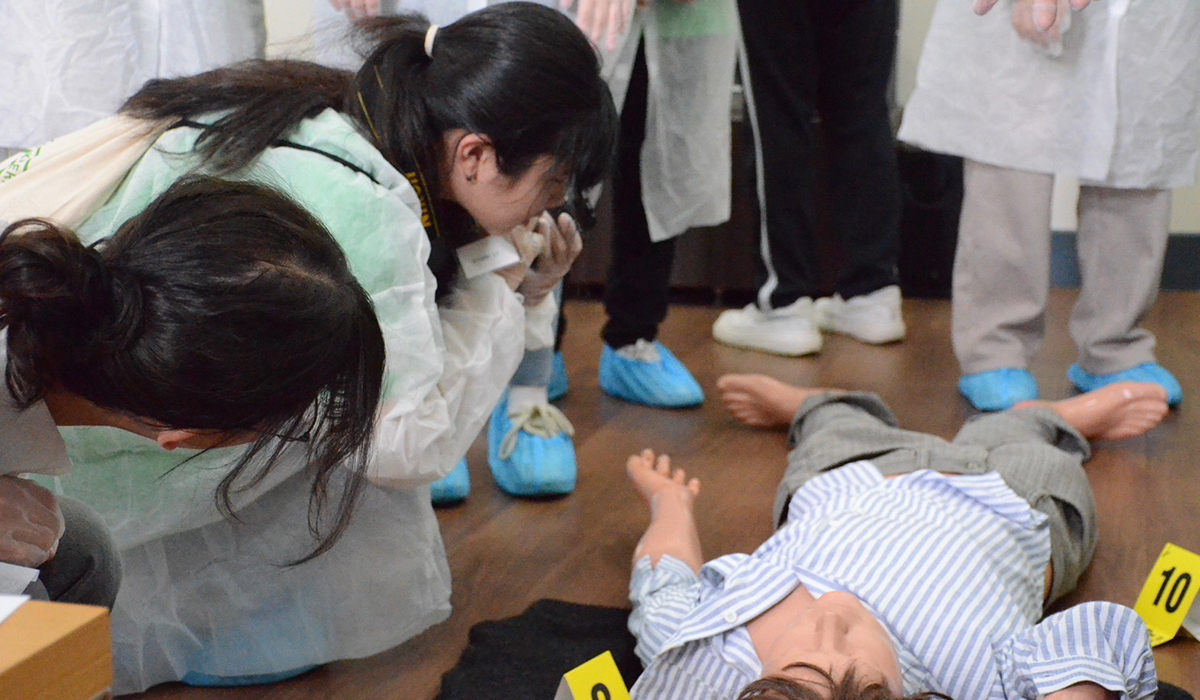
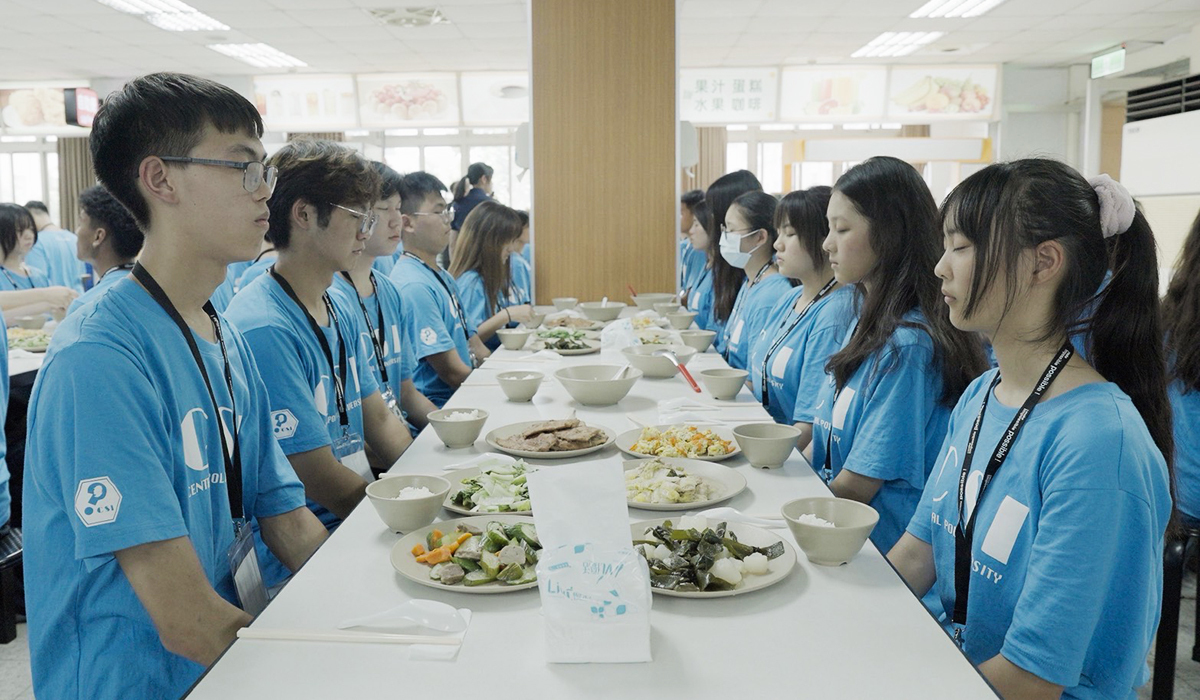
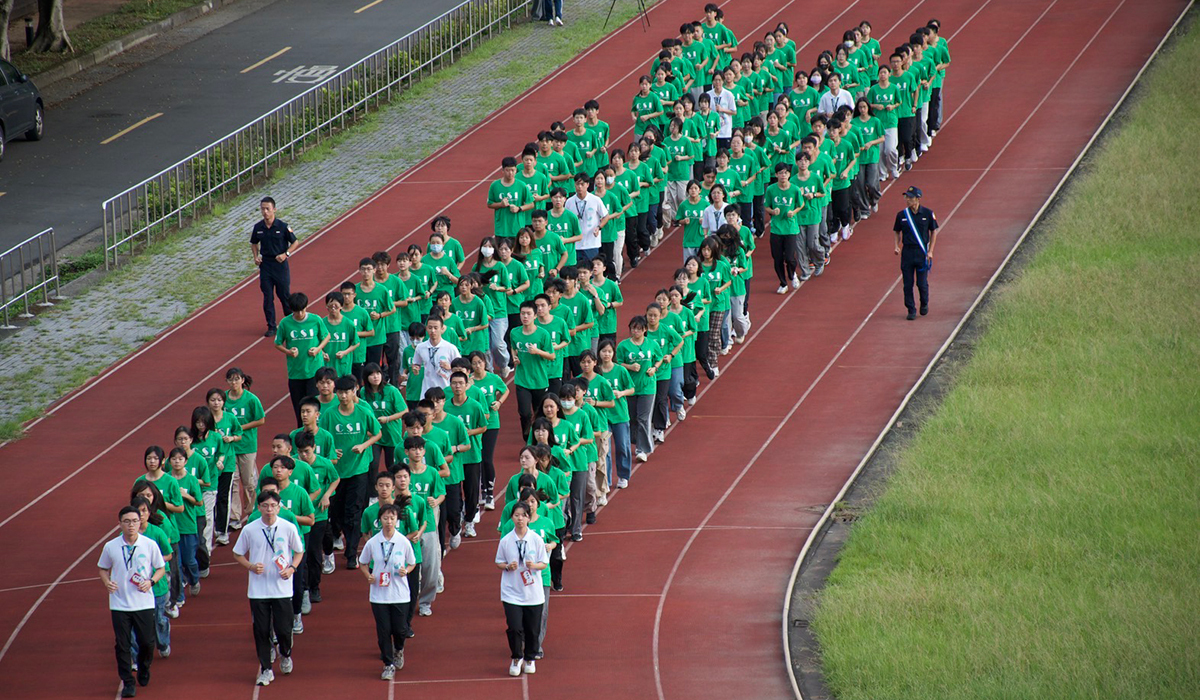
Throughout the five-day program, participants received professional training in crime scene investigation, forensic evidence examination, simulated crime scene reconstruction, and firearms shooting experiences. Beyond classroom learning, the camp also incorporated morning runs, physical fitness training, university anthem practice, disciplined daily routines, and team-building activities, allowing participants to experience the University's rigorous yet honorable campus culture firsthand. Through high standards of discipline and collaborative challenges, students developed self-discipline, responsibility, resilience, and an appreciation for the importance of teamwork, trust, and adapting to different professional environments.
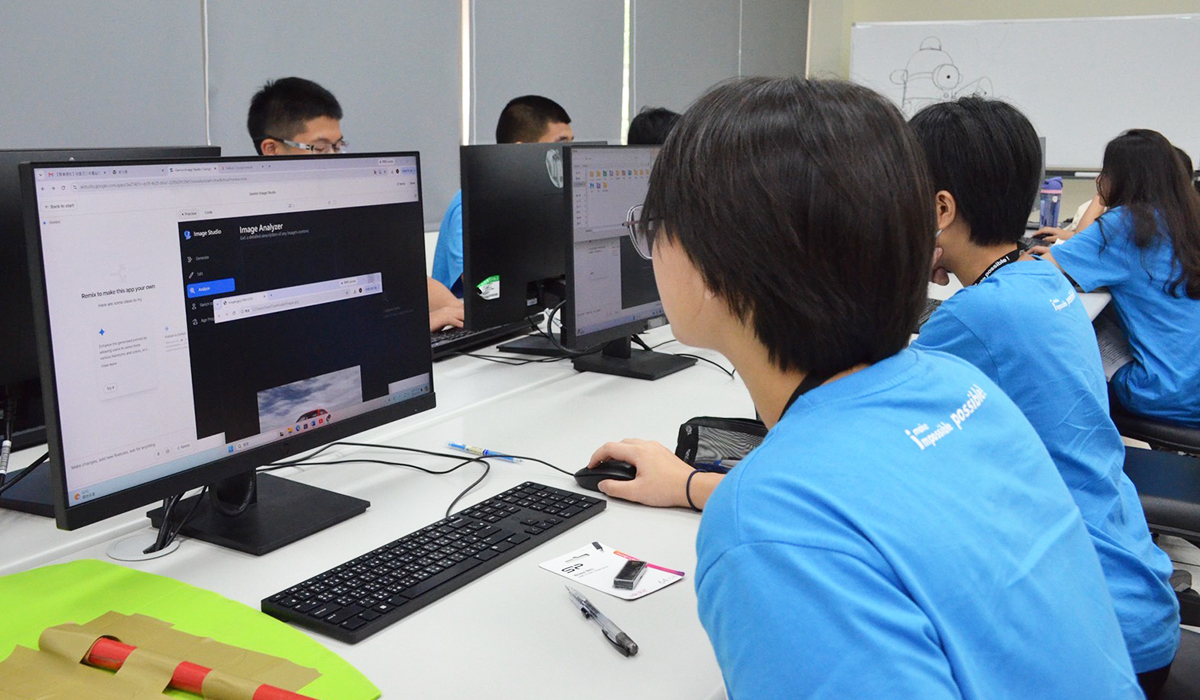
Recognizing the profound educational transformation driven by artificial intelligence, this year's camp integrated AI into the forensic science curriculum. Participants explored how AI is applied in modern forensic investigations, while the teacher program encouraged educators to consider how AI can be incorporated into Taiwan's Inquiry and Practice curriculum to strengthen students' self-directed learning, interdisciplinary thinking, and problem-solving skills. The curriculum was built around four core competencies—the ability to ask meaningful questions, critical thinking, initiative, and teamwork—to prepare young people with the essential capabilities required in the AI era.
One of the camp's central messages was that the greatest impact of AI is not simply making knowledge more accessible, but significantly amplifying individual capabilities. Participants were introduced to the concept of the Matthew Effect in the AI era: individuals who ask better questions, think more deeply, and engage in more proactive learning can interact with AI more effectively, leading to richer, deeper, and more innovative learning outcomes. Developing students' ability to ask meaningful questions is therefore not only fundamental to cultivating independent learners but also the key to making the best use of AI and maximizing the Matthew Effect.
The senior high school teacher program embraced the educational philosophy that "Nurturing talent is like cultivating trees—when each grows according to its nature, it flourishes naturally." Guided by the principles of questioning, inquiry, encouragement, and appreciation, the program encouraged teachers to rethink their educational roles in the AI era. While AI can rapidly provide knowledge, teachers remain irreplaceable in inspiring students to think critically, igniting their passion for learning, and helping them discover their unique potential. By encouraging thoughtful questioning, deepening learning through inquiry, motivating students to overcome challenges, and building confidence through appreciation, teachers can help students develop self-awareness through experience, identify meaningful life goals, and cultivate the intrinsic motivation needed for lifelong growth.
Since its establishment in 2015, the CSI Forensic Science Camp has organized 16 camps for senior high school students and 6 camps for senior high school teachers, attracting more than 3,280 participants. Over the years, it has grown into one of Taiwan's most distinctive experiential education programs in forensic science. The camp has consistently upheld the belief that the purpose of education is not merely to fill students' minds with knowledge, but to ignite the motivation that drives lifelong learning. Likewise, the value of AI lies not only in providing answers, but in amplifying every individual's potential. When students learn to ask meaningful questions, transform reflection into action, and continue growing through experience, AI becomes a powerful catalyst that enhances learning outcomes through the Matthew Effect, enabling technology to serve as an important force in helping young people realize their dreams.
As the closing ceremony brought the 2026 Summer CSI Forensic Science Camp to a successful conclusion, participants departed with five days' worth of new knowledge, lasting friendships, and personal growth. For many of them, this CSI forensic science journey may well become the starting point for exploring future possibilities and courageously pursuing their aspirations.
Throughout the five-day program, participants received professional training in crime scene investigation, forensic evidence examination, simulated crime scene reconstruction, and firearms shooting experiences. Beyond classroom learning, the camp also incorporated morning runs, physical fitness training, university anthem practice, disciplined daily routines, and team-building activities, allowing participants to experience the University's rigorous yet honorable campus culture firsthand. Through high standards of discipline and collaborative challenges, students developed self-discipline, responsibility, resilience, and an appreciation for the importance of teamwork, trust, and adapting to different professional environments.
Recognizing the profound educational transformation driven by artificial intelligence, this year's camp integrated AI into the forensic science curriculum. Participants explored how AI is applied in modern forensic investigations, while the teacher program encouraged educators to consider how AI can be incorporated into Taiwan's Inquiry and Practice curriculum to strengthen students' self-directed learning, interdisciplinary thinking, and problem-solving skills. The curriculum was built around four core competencies—the ability to ask meaningful questions, critical thinking, initiative, and teamwork—to prepare young people with the essential capabilities required in the AI era.
One of the camp's central messages was that the greatest impact of AI is not simply making knowledge more accessible, but significantly amplifying individual capabilities. Participants were introduced to the concept of the Matthew Effect in the AI era: individuals who ask better questions, think more deeply, and engage in more proactive learning can interact with AI more effectively, leading to richer, deeper, and more innovative learning outcomes. Developing students' ability to ask meaningful questions is therefore not only fundamental to cultivating independent learners but also the key to making the best use of AI and maximizing the Matthew Effect.
The senior high school teacher program embraced the educational philosophy that "Nurturing talent is like cultivating trees—when each grows according to its nature, it flourishes naturally." Guided by the principles of questioning, inquiry, encouragement, and appreciation, the program encouraged teachers to rethink their educational roles in the AI era. While AI can rapidly provide knowledge, teachers remain irreplaceable in inspiring students to think critically, igniting their passion for learning, and helping them discover their unique potential. By encouraging thoughtful questioning, deepening learning through inquiry, motivating students to overcome challenges, and building confidence through appreciation, teachers can help students develop self-awareness through experience, identify meaningful life goals, and cultivate the intrinsic motivation needed for lifelong growth.
Since its establishment in 2015, the CSI Forensic Science Camp has organized 16 camps for senior high school students and 6 camps for senior high school teachers, attracting more than 3,280 participants. Over the years, it has grown into one of Taiwan's most distinctive experiential education programs in forensic science. The camp has consistently upheld the belief that the purpose of education is not merely to fill students' minds with knowledge, but to ignite the motivation that drives lifelong learning. Likewise, the value of AI lies not only in providing answers, but in amplifying every individual's potential. When students learn to ask meaningful questions, transform reflection into action, and continue growing through experience, AI becomes a powerful catalyst that enhances learning outcomes through the Matthew Effect, enabling technology to serve as an important force in helping young people realize their dreams.
As the closing ceremony brought the 2026 Summer CSI Forensic Science Camp to a successful conclusion, participants departed with five days' worth of new knowledge, lasting friendships, and personal growth. For many of them, this CSI forensic science journey may well become the starting point for exploring future possibilities and courageously pursuing their aspirations.